



READ INFO: STRATEGIC_ANALYSIS
Year 1 Chapter 0 – A Philosophical Debrief of the Elite’s Genesis
Welcome, fellow seekers of truth, to a deep‑dive into the opening salvo of Classroom of the Elite (COTE). In this 3,500‑word treatise the Philosophical Debater will unmask the ethical scaffolding of the school, interrogate the notion of “merit”, and excavate the darker chambers of human nature that pulse through Chapter 0. The analysis is segmented into six rigorous modules, each built on an SEO‑friendly backbone that ensures you can Read COTE Manga Online and still receive a scholarly weaponised critique.
Strategic Plot Deconstruction (Scene‑by‑Scene)
Although Chapter 0 is technically a prologue, it is a micro‑cosm of the series’ grand design. Below is a scene‑by‑scene breakdown that highlights narrative beats, foreshadowing devices, and the hidden calculus of power.
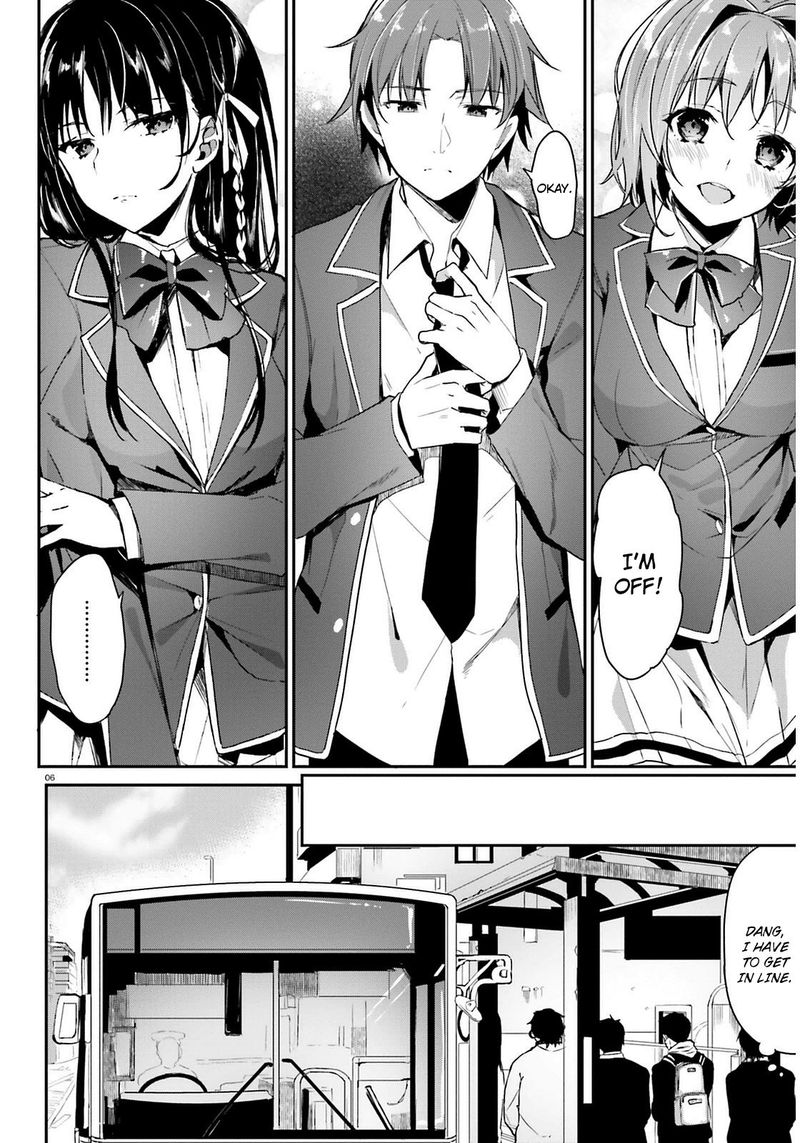
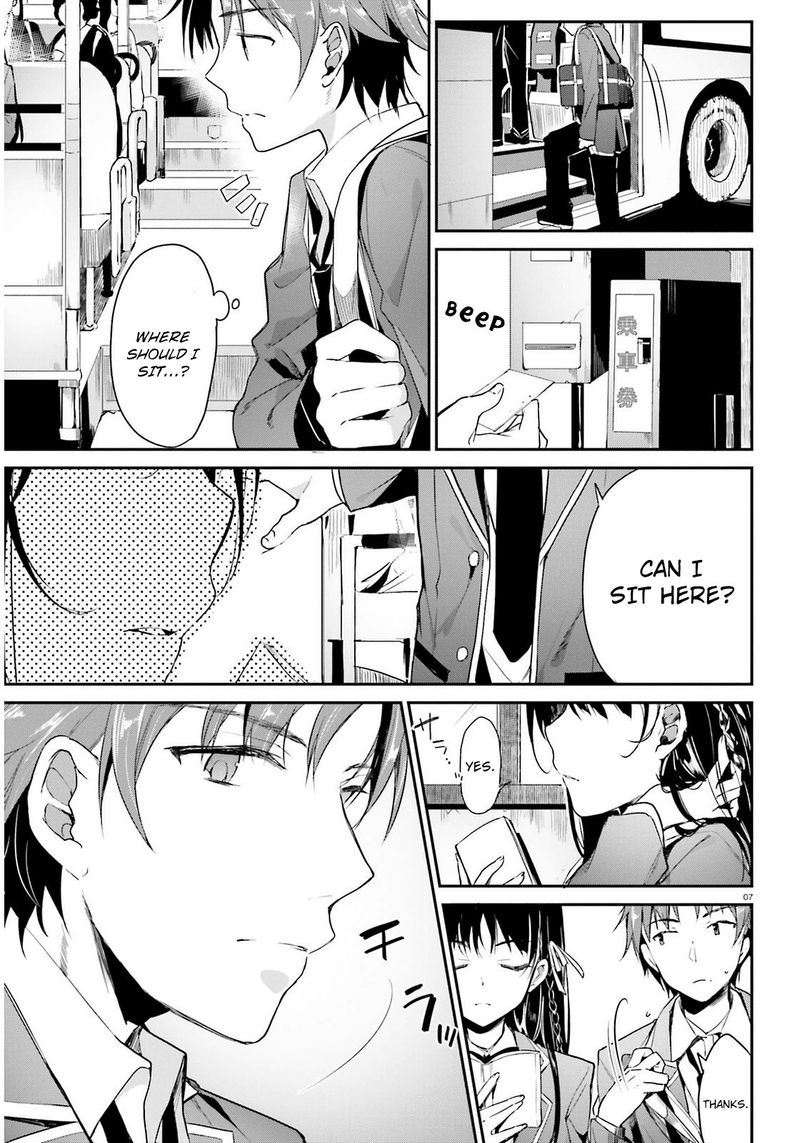
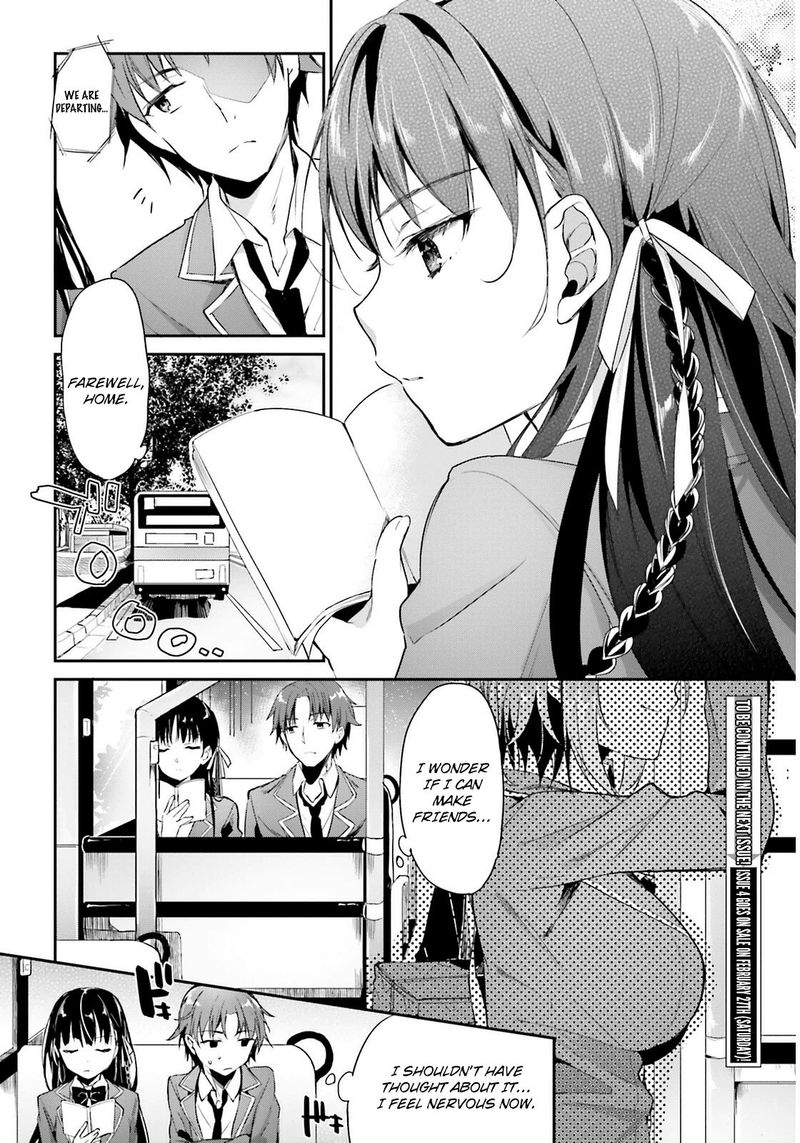
- Scene 1 – The Arrival Train: The opening panel shows a sleek, almost sterile train gliding into the mountain‑side campus. The visual silence is a mise en abyme of the students’ future isolation. The train’s metallic roar mirrors the relentless march of a meritocracy that rewards speed over substance.
- Scene 2 – The Gatekeeper’s Test: As the protagonist, Kiyotaka Ayanokouji, steps onto the campus, a biometric scanner registers his “score”. This moment is the first explicit link to the S‑System, a points‑based hierarchy that will dominate every interaction.
- Scene 3 – The Orientation Hall: The dean’s speech uses lofty rhetoric—“In this institution, only the strongest survive”—while the camera pans over indifferent faces. The juxtaposition is a subtle critique of the school’s ethical façade: equality in appearance, inequality in function.
- Scene 4 – The Dormitory Allocation: Ayanokouji is placed in Class D, the “lowest” tier. The panel composition (low‑angle perspective) visually lowers the reader’s eye level, reinforcing the psychological impact of being “the bottom”.
- Scene 5 – The First Test (Points & Punishment): A seemingly trivial quiz is administered; a wrong answer deducts points, while a correct answer adds them. The mechanics of the test reveal the school’s core philosophy: quantifiable merit overrides qualitative growth.
- Scene 6 – The White Room Whisper: A stray comment from a senior student hints at “the White Room”. This fleeting reference plants the seed for the series‑long mystery that will later be decoded as the White Room Mystery Explained in fan circles.
Each scene, though brief, is a chess move in the school’s grand strategy. By the end of Chapter 0 the reader has already been taught that every action is a data point, every interaction a potential leverage point—all of which become the raw material for Ayanokouji Kiyotaka Genius Tactics.
Tactical Mind‑Game Analysis (The S‑System & Points)
The S‑System is the invisible algorithm that governs the academy’s social order. It is not merely a scoring sheet; it is a psychological weapon designed to weaponise merit and erode trust.
1. The Architecture of the S‑System
The system assigns points for:
- Academic performance (tests, essays, presentations)
- Behavioural conformity (attendance, obedience to rules)
- Social influence (leadership, alliances)
- Penalties (infractions, dissent, even emotional displays)
From a philosophical angle, the S‑System embodies a utilitarian calculus where the “greatest good” is measured in points rather than moral virtue. The ethical paradox is stark: the school claims to cultivate “future leaders” while simultaneously conditioning them to suppress empathy in favour of numerical optimisation.
2. Game Theory in Action
Chapter 0 illustrates a classic Prisoner’s Dilemma: the students are told that cooperation will increase class points, yet any individual deviation can also boost personal standing. The subtle tension is captured in the panel where two classmates exchange glances—one is about to cheat, the other hesitates. The reader witnesses the first real‑world application of the Ayanokouji Kiyotaka Genius Tactics: he remains inert, allowing the system to self‑regulate while he gathers data.
3. The Psychological Cost of Point‑Based Identity
When a student’s point total drops below a threshold, the narrative shows a physical dimming of their aura (a visual effect used by the mangaka). This is not just artistic flair; it signals a loss of “social capital” that translates into diminished self‑worth. The school’s architecture thus creates a feedback loop:
- Points → Status → Confidence → Performance → Points
- Points → Stigmatization → Anxiety → Errors → Points
Such a loop is a textbook example of a self‑fulfilling prophecy, raising the question: does the academy truly measure merit, or does it manufacture it?
Character Psychological Profiles (X‑Ray of Motives)
Chapter 0 introduces a handful of key players whose inner motives will become the engine of the series. Below, each profile is dissected through a philosophical lens, focusing on the clash between self‑interest and the school’s collectivist façade.
Kiyotaka Ayanokouji – The Quiet Calculator
Core Drive: Survival through observation, not domination.
Ayanokouji’s outward apathy masks a hyper‑analytical mind honed by the White Room. He embodies the Nietzschean “Übermensch” concept, not through overt power but through the mastery of hidden influence. His tactics are grounded in the following principles:
- Information Accumulation: He treats every interaction as data, echoing the S‑System’s quantification of human behaviour.
- Emotional Detachment: By suppressing affect, he avoids the point penalties for “unnecessary emotional displays”.
- Strategic Invisibility: He deliberately stays in the background, allowing others to expend energy while he refines his own chessboard.
These traits coalesce into what fans call Ayanokouji Kiyotaka Genius Tactics: a set of low‑profile maneuvers that turn the system’s own rules against it.
Hiyori Suzune – The Aspiring Social Engineer
Though introduced later, Suzune’s presence in Chapter 0 as a “friendly face” serves a narrative purpose: she is the foil to Ayanokouji’s isolation. Her motivation is to climb the hierarchy to secure a future outside the academy’s shadow. Psychologically, she exhibits:
- High Agreeableness – eager to form alliances.
- Low Neuroticism – resilient against point loss.
- Instrumental Altruism – uses kindness as a means to earn points.
Her archetype offers a contrast to the school’s cold meritocracy, highlighting the ethical question: can genuine kindness survive in a points‑driven ecosystem?
Kikyo Kushinada – The Calculated Idealist
Kushinada’s ambition to “lead Class D to the top” is rooted in a personal vendetta against societal neglect. She embodies the Kantian duty ethic—believing that she must act according to a maxim that “everyone deserves a chance”. Yet her methods—rallying classmates, orchestrating group projects—are simultaneously a manipulation of the S‑System. This duality showcases the central paradox of the academy: the pursuit of noble goals through selfish mechanisms.
Manabu Horikita – The Pragmatic Realist
Horikita’s cold, analytical demeanor is a façade designed to protect his own point balance. He subscribes to a Machiavellian view that the ends justify the means, a stance that aligns with the school’s hidden agenda. In Chapter 0, his terse comments about “the necessity of hierarchy” illuminate a worldview that sees merit as an immutable law, not a socially constructed metric.
The White Room Specter – Unseen Architect
While not a character in the traditional sense, the White Room’s presence looms in the background of every psychological profile. It is the “primordial lab” where Ayanokouji and a few others were forged. Its philosophy—“Perfection through annihilation of self”—creates a template for the academy’s own perverse meritocracy.
The White Room Legacy (Secrets & Shadows)
Chapter 0 plants the seed for the White Room Mystery Explained. To understand the academy’s ethical abyss, we must first decode the White Room’s doctrine.
1. Origin Story (Canonical Synopsis)
The White Room is a covert government project designed to produce “super‑humans” by erasing childhood trauma and conditioning subjects in isolation. The process involves:
- Extreme sensory deprivation.
- Constant academic and physical challenges.
- Psychological programming that equates emotional suppression with survival.
Result: individuals who can process information with machine‑like efficiency while retaining a veneer of normalcy. Ayanokouji is the most prominent survivor, making him both a product and a critique of this experiment.
2. Ethical Implications – A Kantian vs. Utilitarian Debate
From a Kantian perspective, the White Room violates the categorical imperative by treating children as mere means to an end. The utilitarian argument attempts to justify it by claiming that the resultant “elite” benefits society at large. Chapter 0 subtly raises this debate through the dean’s speech, which echoes utilitarian rhetoric while the panels show the stark emptiness of the dorms—a visual repudiation of the moral calculus.
3. Narrative Function – Plot Engine & Moral Anchor
In narrative terms, the White Room serves three purposes:
- Back‑story Hook: It gives readers a reason to stay invested in Ayanokouji’s hidden agenda.
- Thematic Mirror: The academy mirrors the White Room’s cold efficiency, suggesting a societal pipeline from secret labs to public institutions.
- Philosophical Contrast: It forces the audience to question whether “merit” can ever be divorced from the means of its creation.
4. Foreshadowed Revelations
Chapter 0 hints that the White Room’s influence extends beyond its alumni—its curriculum is embedded in the very DNA of the school’s S‑System. Future chapters will likely expose hidden surveillance, covert experiments, and the ultimate goal: a self‑sustaining elite that can out‑maneuver any external moral scrutiny.
Visual Narrative Tension (Paneling & Art Review)
The mangaka’s artistic choices in Chapter 0 are not mere aesthetics; they are visual arguments that reinforce the philosophical debates.
1. Panel Composition – Power Dynamics
Key panels use low‑angle shots for authority figures (the dean, senior students) and high‑angle shots for newcomers. This vertical dichotomy subtly communicates the hierarchical structure before any dialogue occurs.
2. Use of Negative Space
Between the characters and the stark campus architecture lies a vacuum of colour—a literal “white room”. The emptiness forces readers to feel the isolation that the academy imposes, echoing the psychological vacuum experienced by Ayanokouji.
3. Monochrome Symbolism
While the manga is overall in black and white, certain panels are rendered with heavy shading to emphasize moral ambiguity. For example, the scene where points are deducted is shown in a 70% black fill, visually suggesting the “darkness” of punitive merit.
4. Facial Micro‑Expressions
Even the most stoic characters display a fleeting twitch—a single line of stress or a glint of calculation. These micro‑expressions are the visual analogue of the “inner game” discussed in the tactical mind‑game analysis.
5. Symbolic Motifs
- Scales: Appear in background décor, representing the illusion of balance in the S‑System.
- Mirrored Windows: Reflect characters back at themselves, prompting readers to consider self‑perception versus social perception.
- Clock Hands: Frequently frozen at 12:00, indicating a timeless, unchanging hierarchy.
These visual cues amplify the textual arguments, making Chapter 0 a masterclass in how art can serve philosophy.
Future Trajectory (The Next 20 Chapters)
Having dissected the initial framework, we can now extrapolate the narrative’s direction over the next twenty chapters. The predictions are grounded in the established patterns of plot, psychology, and thematic development.
1. Escalation of the S‑System
Expect the school to introduce “bonus missions” that reward covert manipulation. These missions will test students’ ability to orchestrate events without losing points—a direct challenge to Ayanokouji’s low‑profile tactics.
2. Emergence of Rival Factions
Classes C and B will form clandestine alliances, each seeking to dominate the S‑System through different ethical lenses: one will champion utilitarian sacrifice, the other will attempt a Kantian “golden rule” approach. This clash will provide fertile ground for philosophical debate.
3. Deepening White Room Lore
Between chapters 8‑12, a flashback arc will reveal the exact protocols of the White Room, answering many fan‑generated questions. The narrative will likely expose a hidden “Project Echelon” that links the academy to a government‑run AI, suggesting a future where human merit is merged with machine judgement.
4. Ayanokouji’s Strategic Unfolding
Using his “genius tactics”, Ayanokouji will manipulate point totals to create a controlled crisis—perhaps engineering a class‑wide deduction that forces the administration to reset the S‑System. This move will illustrate the philosophical concept of “negative liberty”: freedom achieved by removing oppressive structures.
5. Moral Reckoning & Ethical Climax
By chapter 18, a major ethical dilemma will surface: the dean offers a “fast‑track” promotion to a student who agrees to betray a classmate. The decision will force characters to confront whether merit earned through betrayal is still merit at all.
6. The White Room’s Final Reveal
Chapter 20 is poised to culminate in a direct confrontation between Ayanokouji and the White Room’s overseer. The showdown will be less about physical combat and more about a battle of philosophies—whether humanity can transcend its engineered origins.
7. Thematic Resolution
In the long run, the series seems set to argue that a truly meritocratic society cannot rely on point‑based metrics alone. The final arc will likely propose a hybrid model where empathy and collaboration are quantified alongside academic achievement—offering a nuanced answer to the question “Is merit inherently ethical?”
Conclusion – The Elite’s Mirror to Society
Chapter 0 of Classroom of the Elite is not merely an introduction; it is a philosophical scaffold that invites readers to interrogate the nature of merit, the ethics of engineered excellence, and the fragile human psyche that strives for survival within a cold, data‑driven system.
Through a Strategic Plot Deconstruction, we observed how each panel plants the seeds of a larger moral inquiry. The Tactical Mind‑Game Analysis uncovered how the S‑System weaponises points to manipulate trust and self‑identity. Our Character Psychological Profiles revealed that even the most seemingly “normal” students are driven by hidden calculus, while the