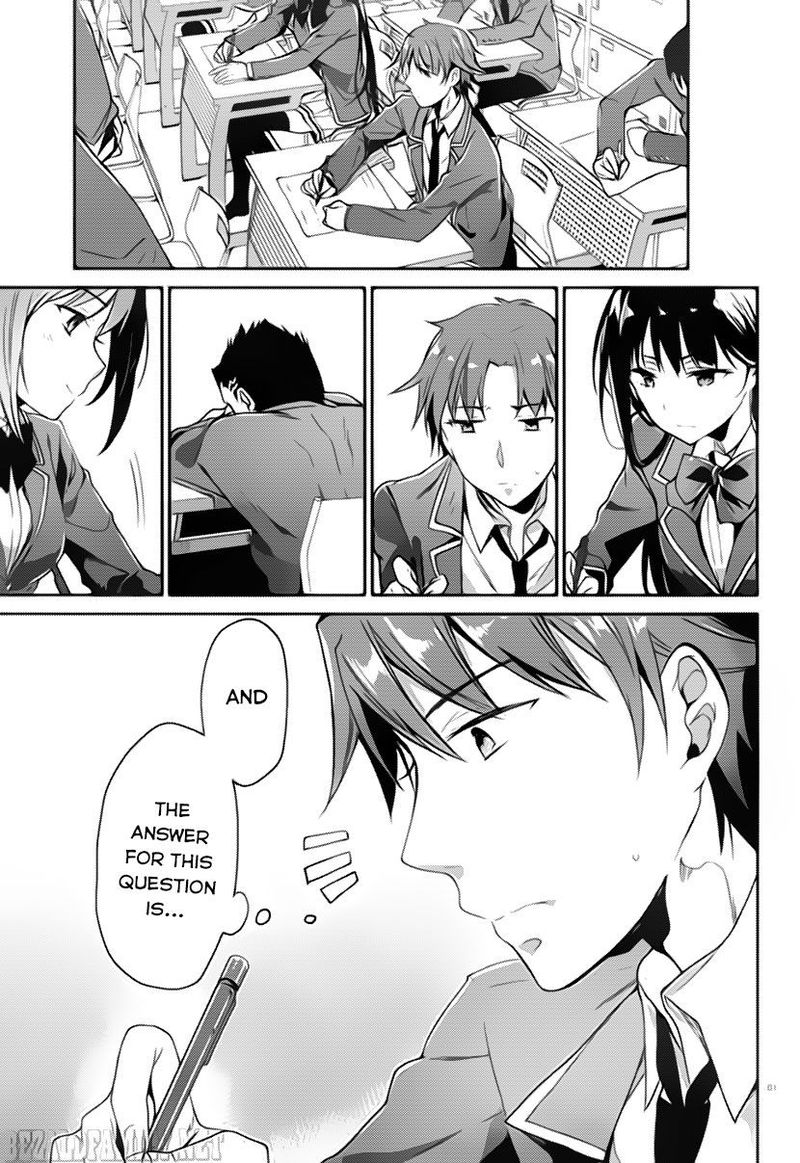

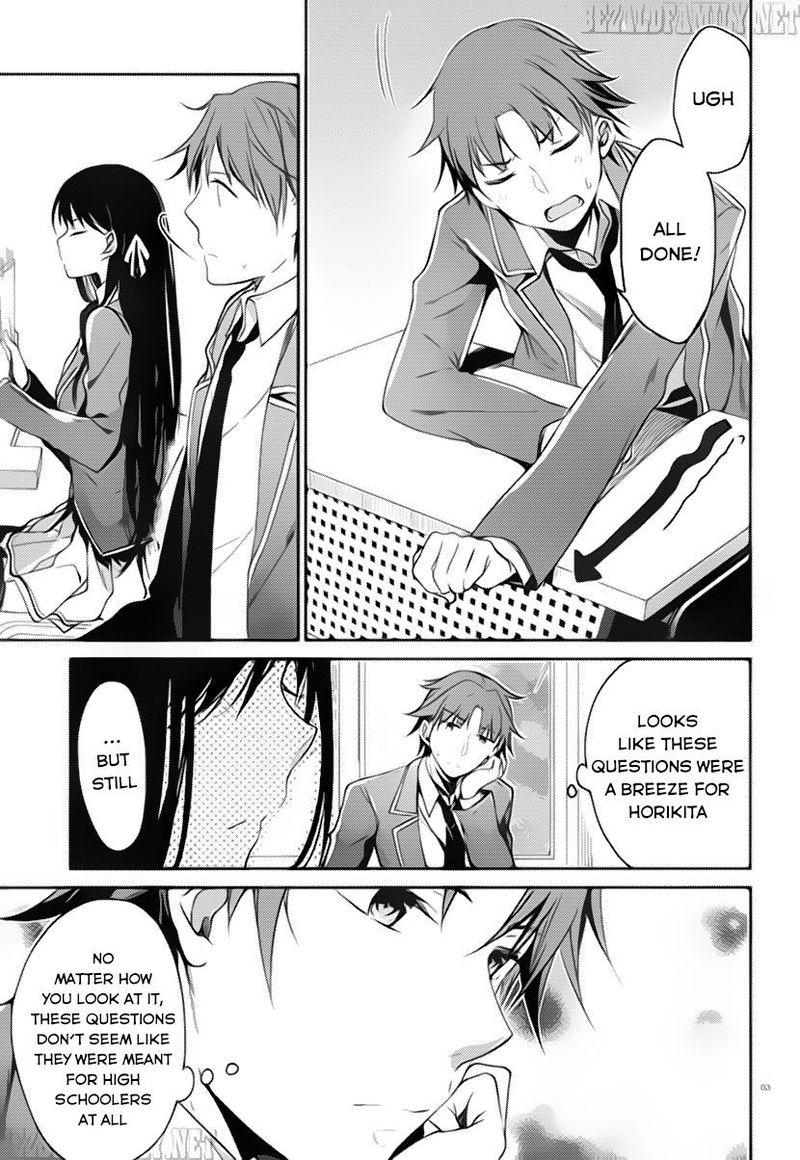
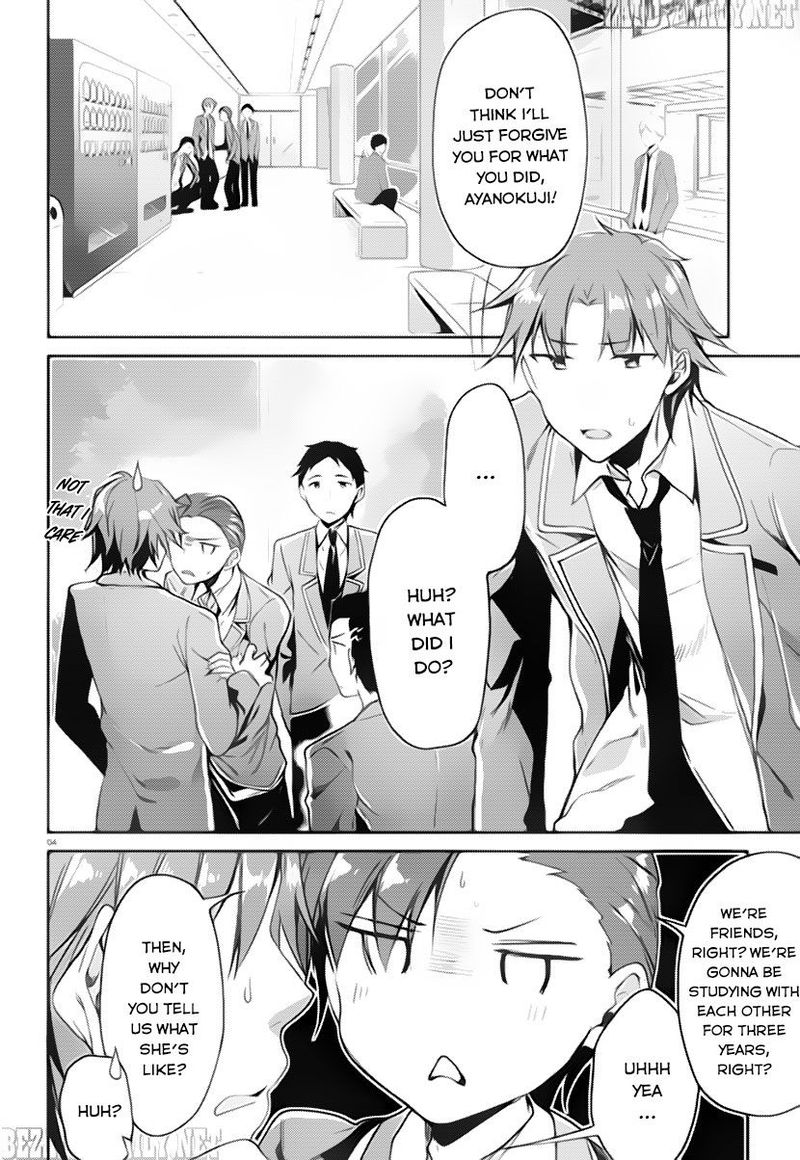
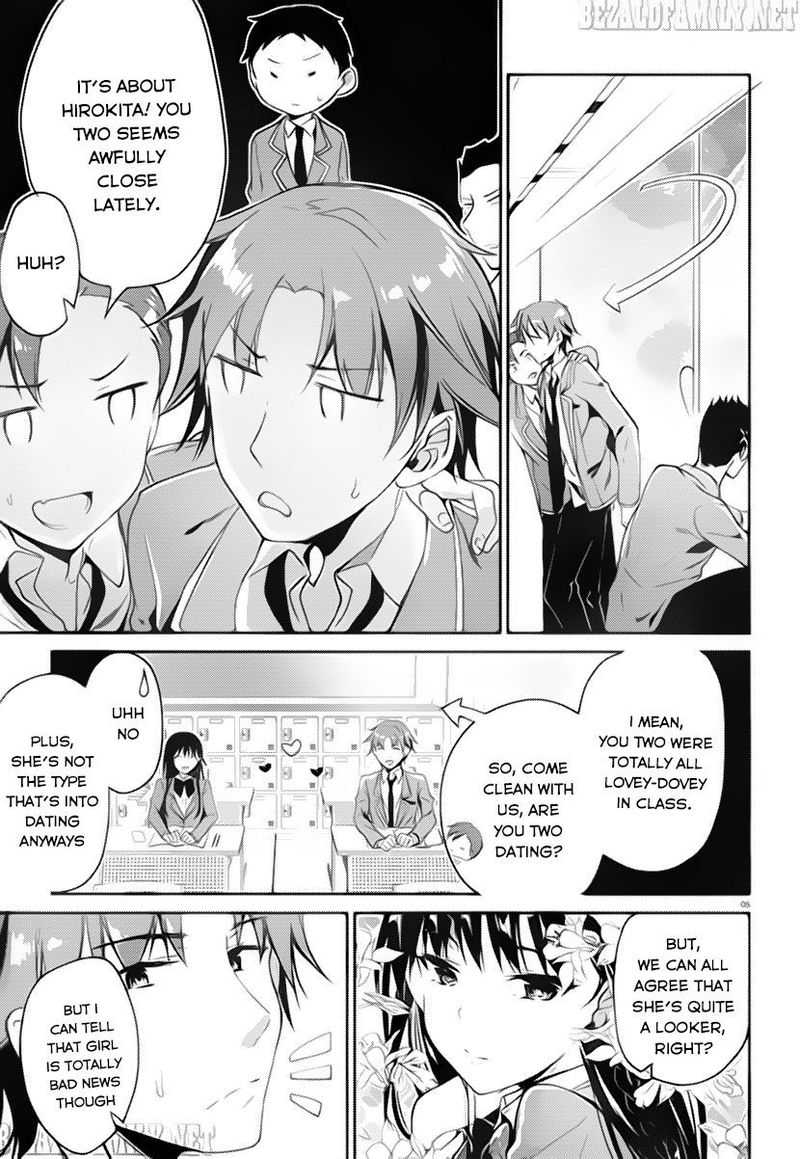

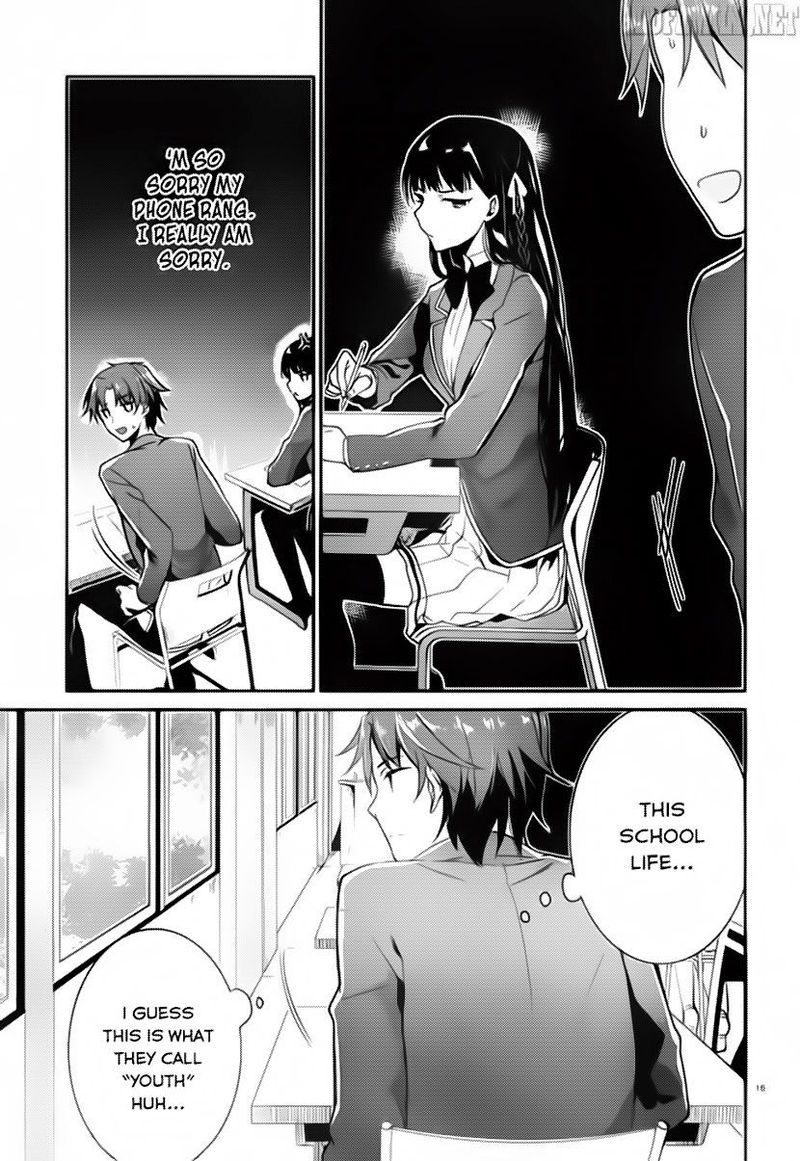
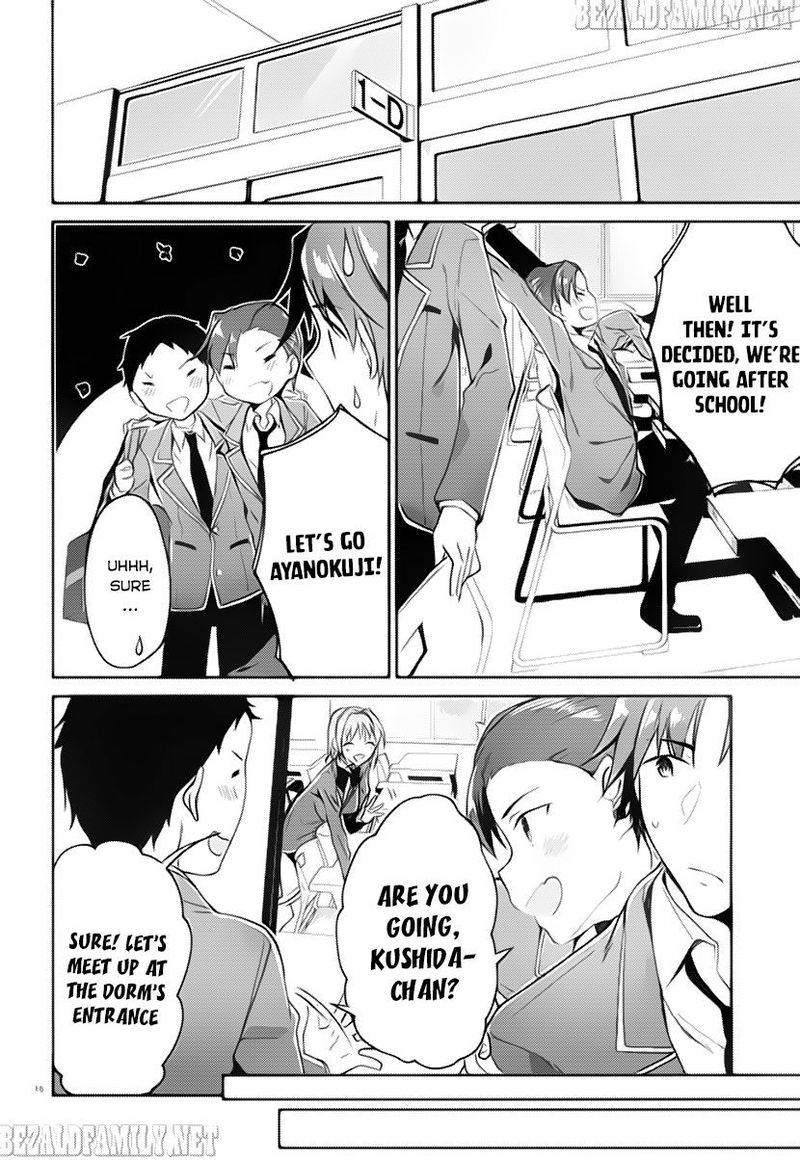
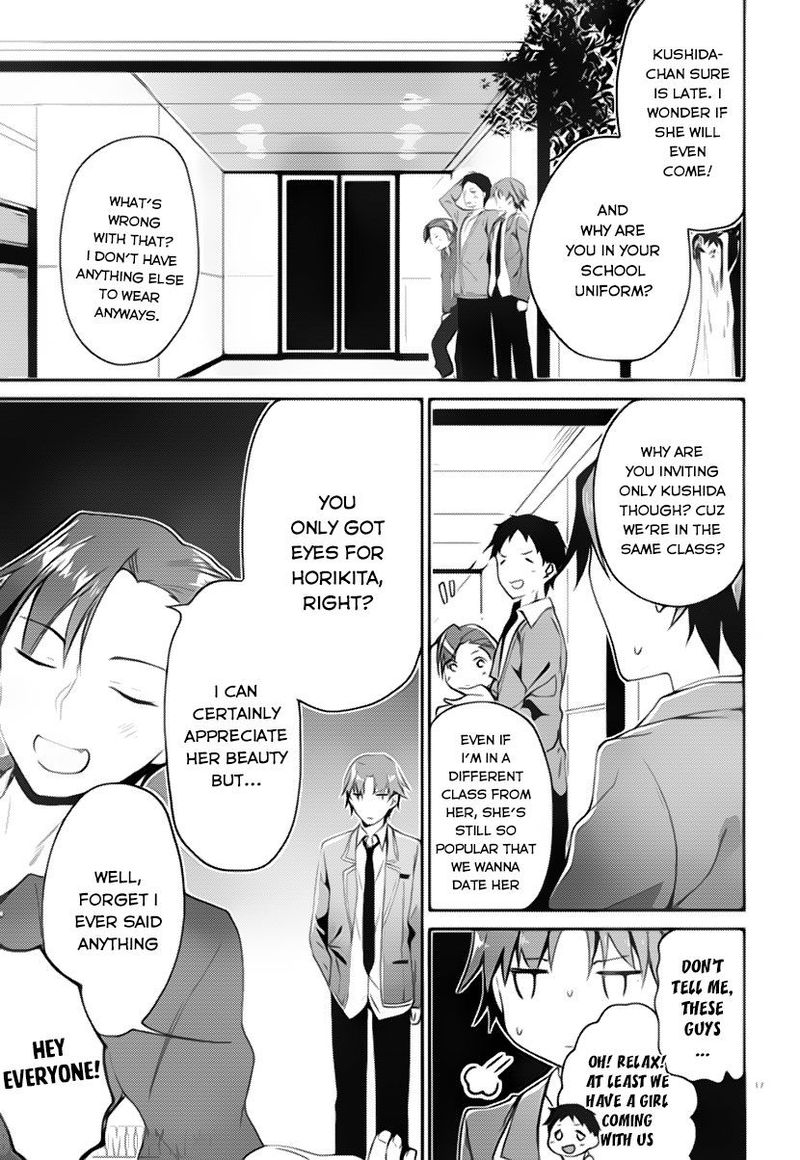
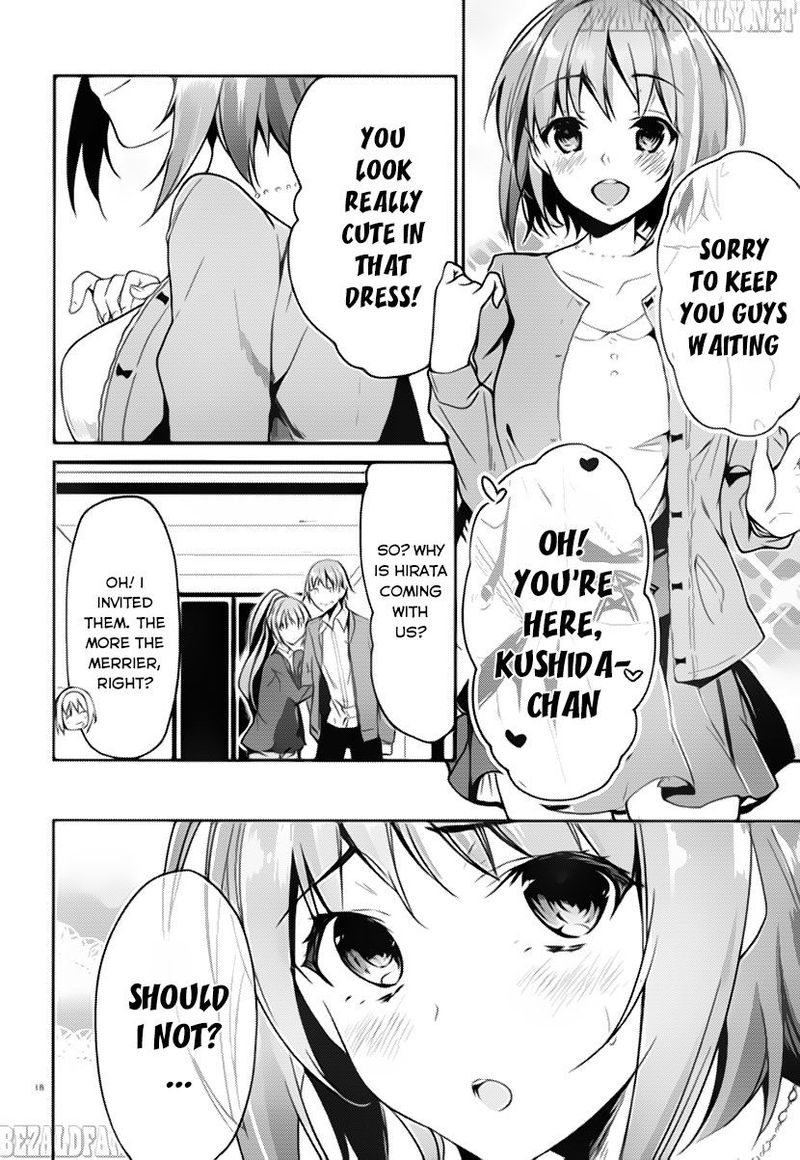
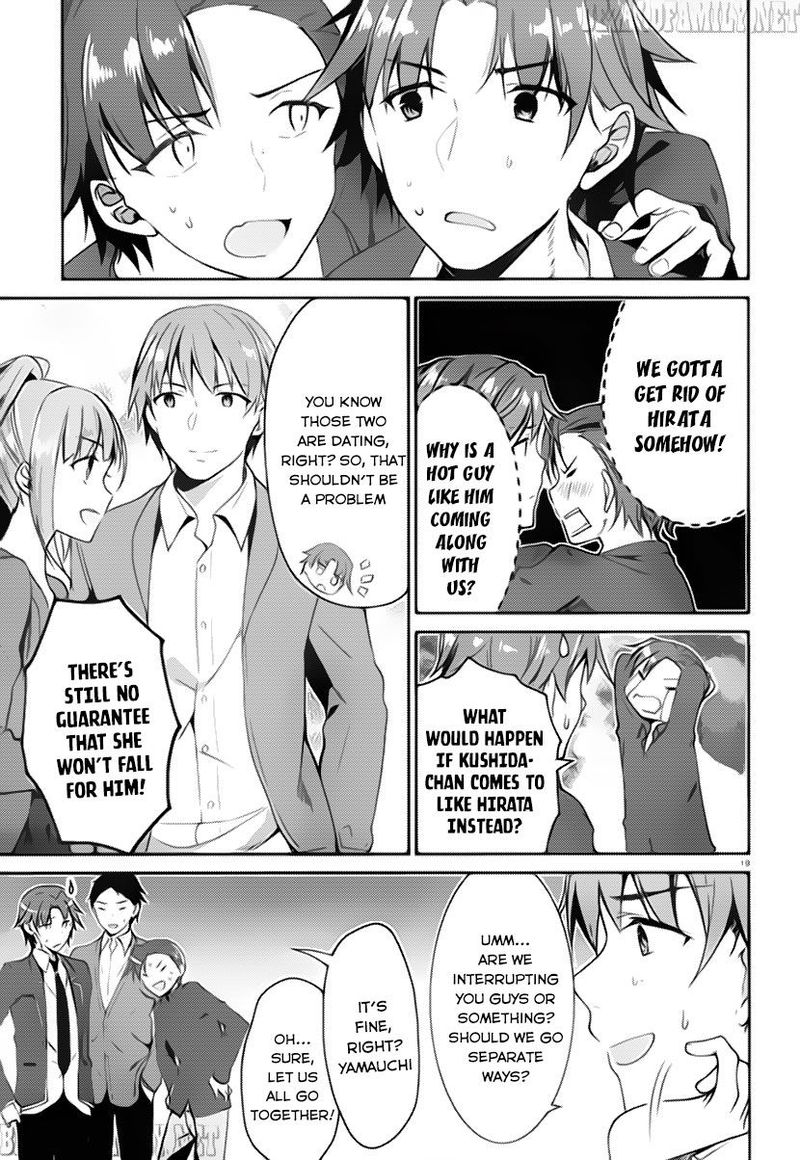
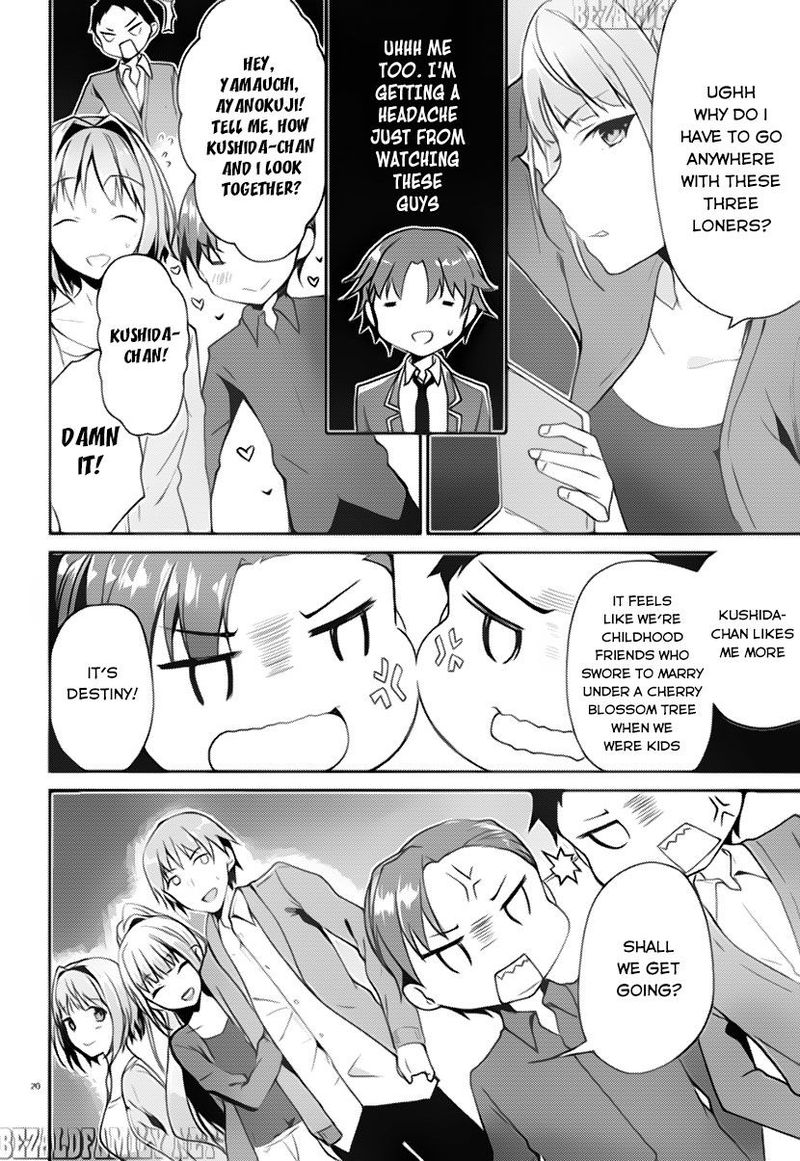
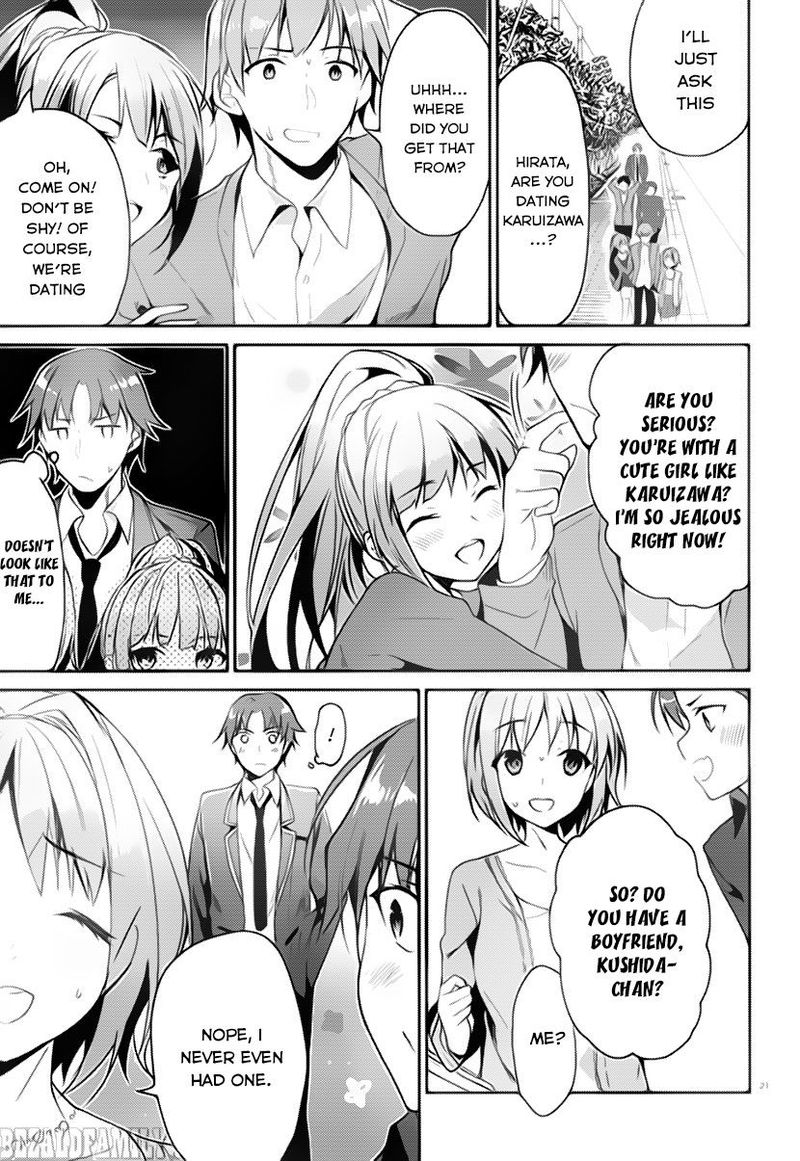
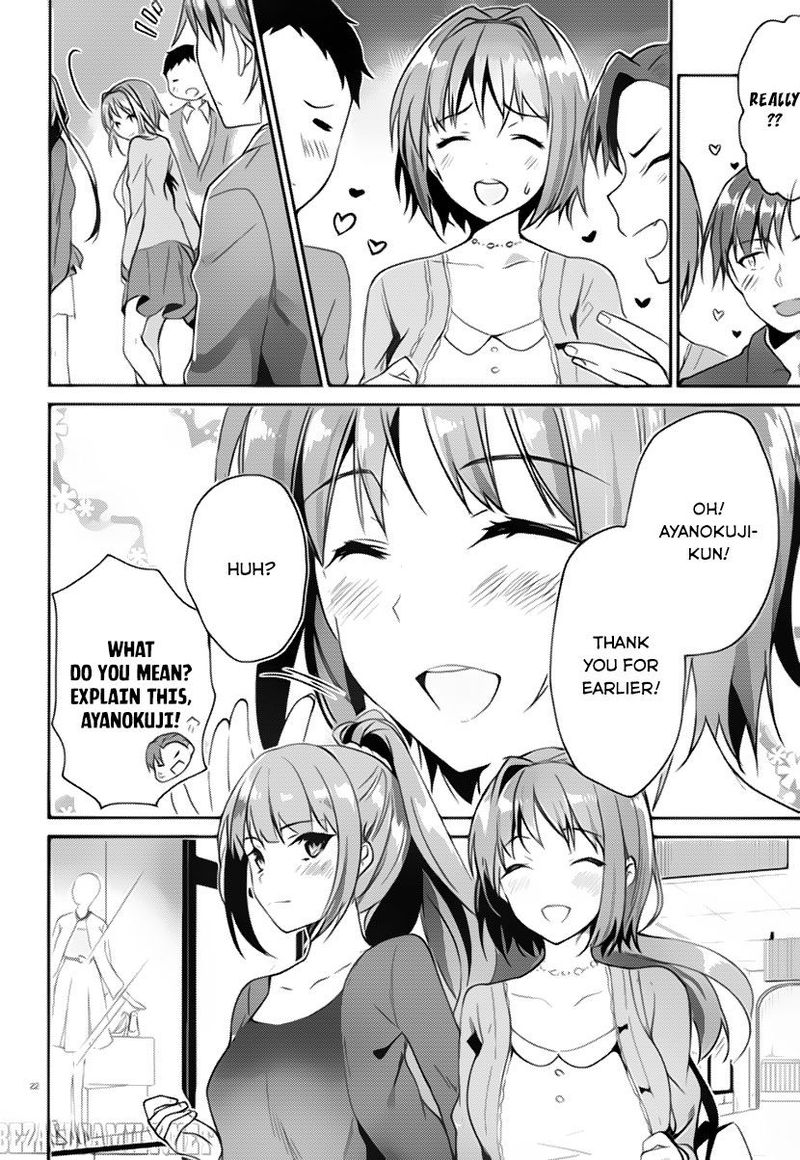
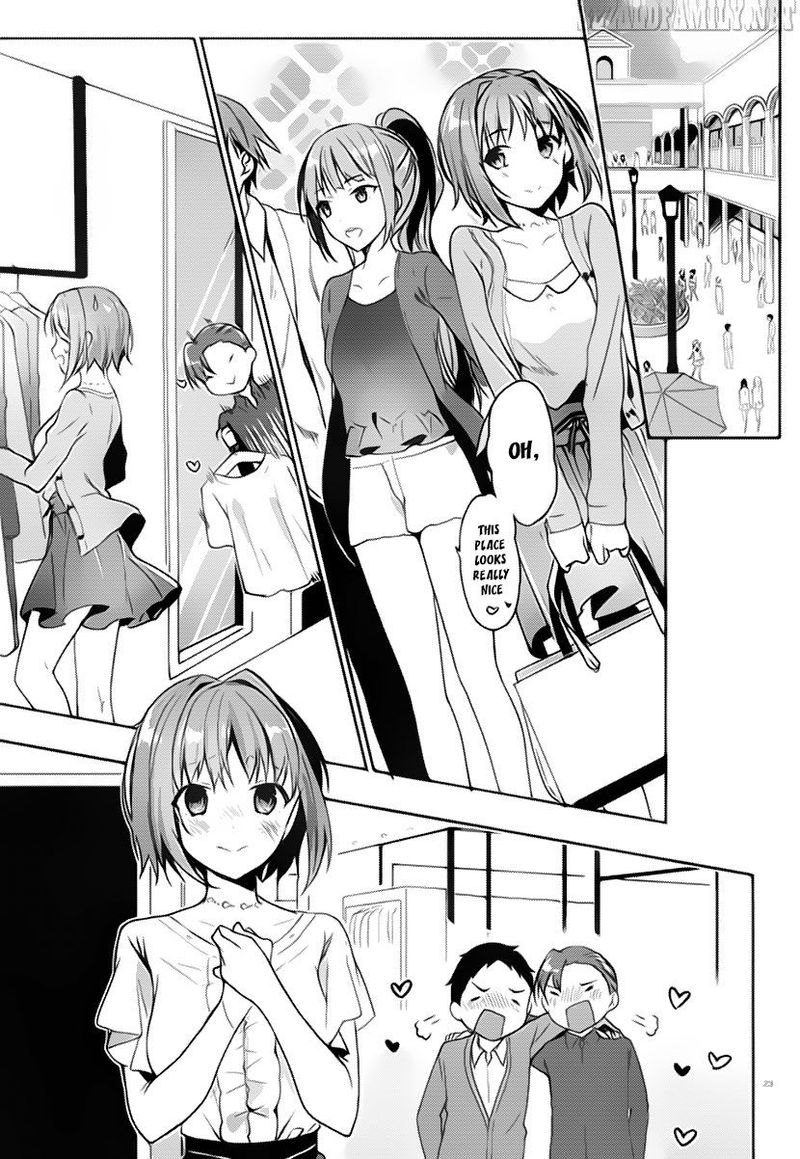
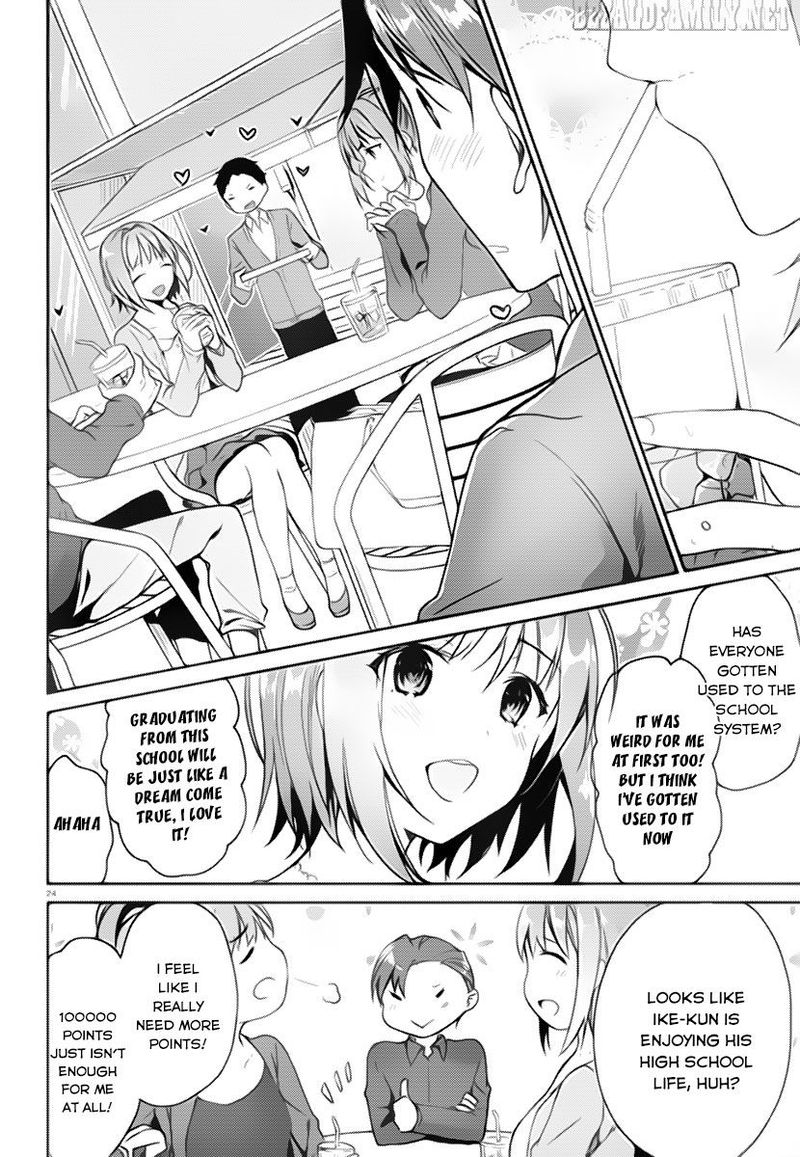
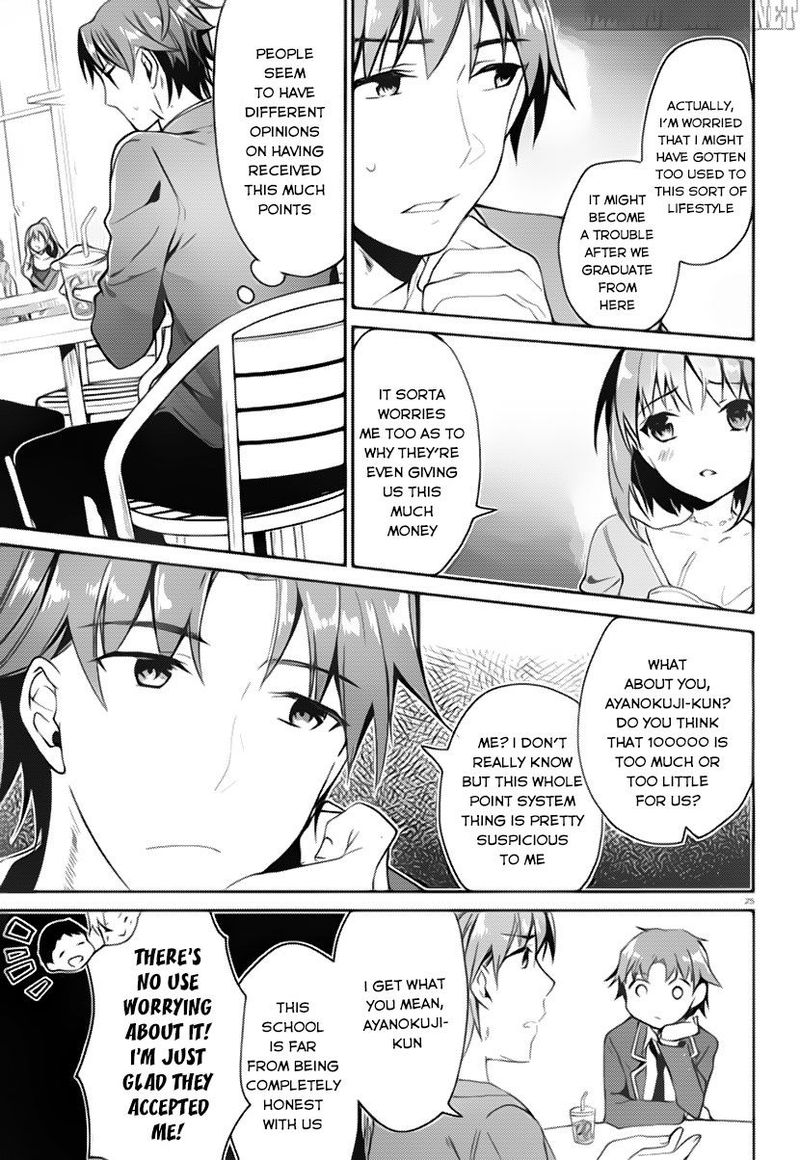
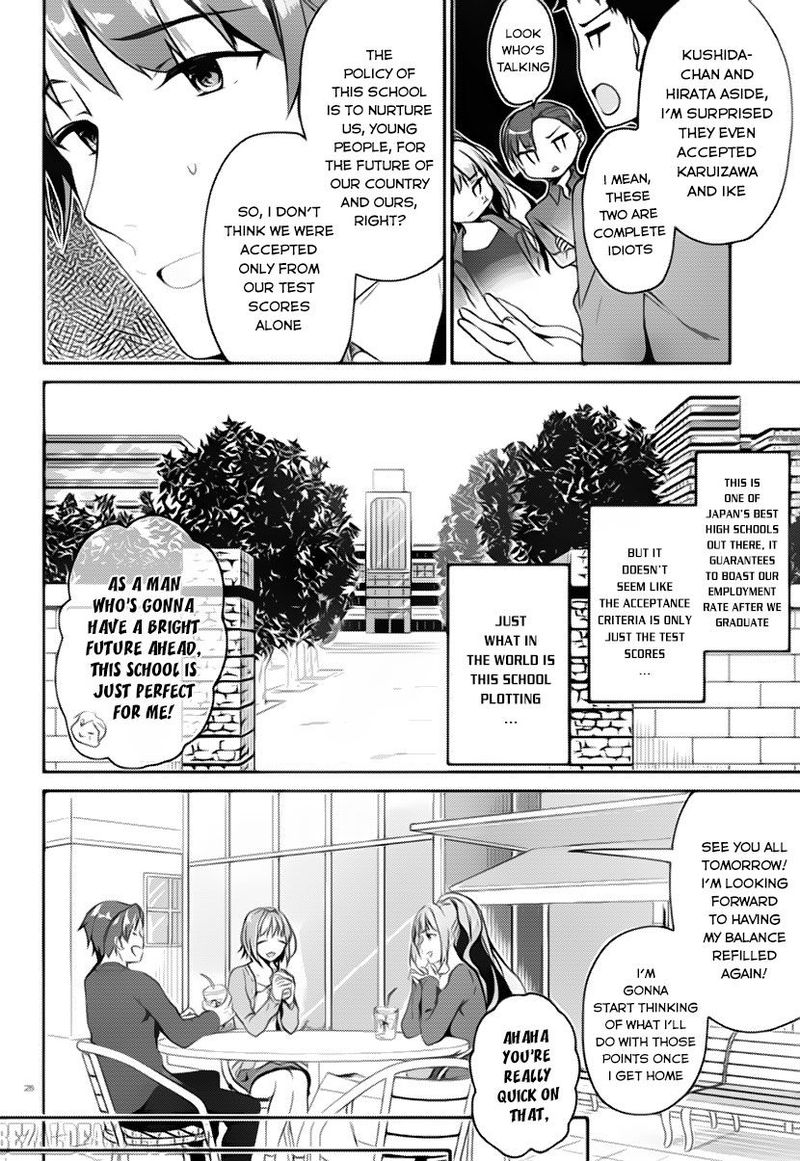
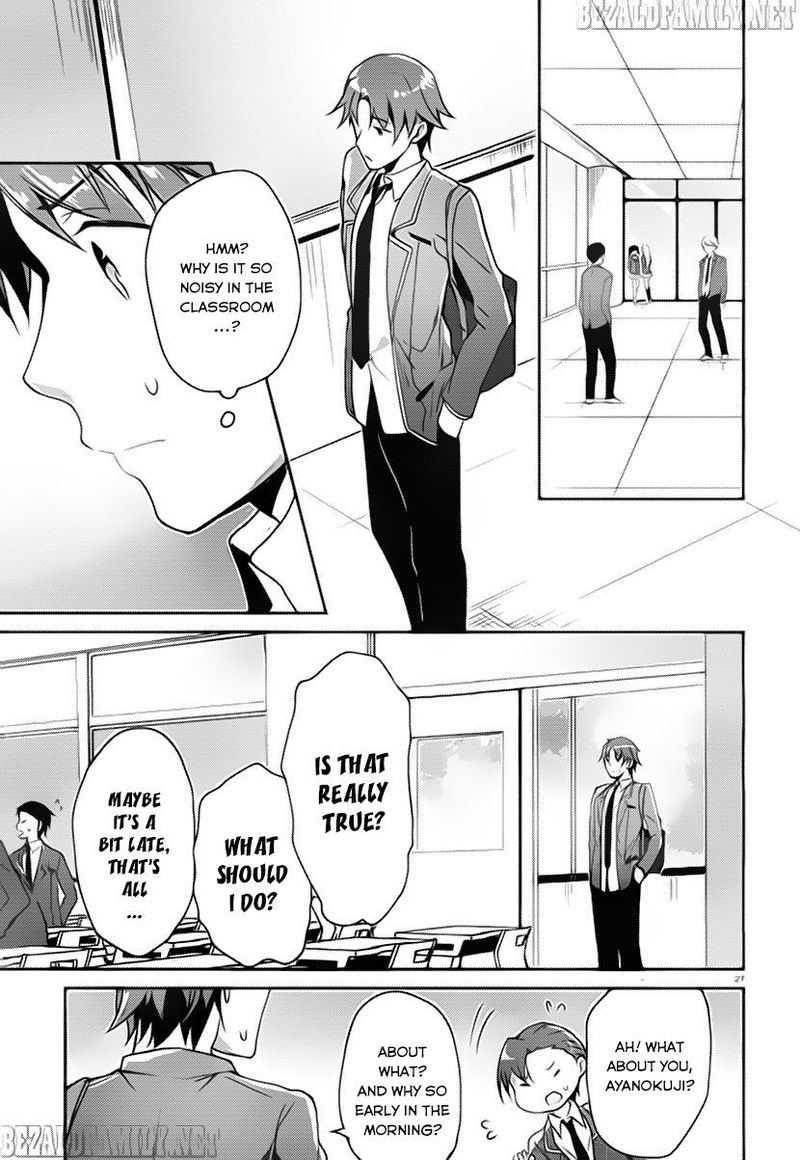
Chapter 4 Summary
The morning light slipped through the high windows of the third floor, casting long, thin bars across the polished floor of the classroom. The air was still, heavy with the faint scent of chalk and the lingering echo of the previous day’s heated debate. In the corner, a lone figure sat with his back straight, eyes half‑closed, as if the world outside were a distant television he could ignore. Kiyotaka Ayanokouji’s presence was a quiet anchor in the storm of chatter that swirled around him. He seemed to be listening, but his mind was already several steps ahead, cataloguing the subtle shifts in tone, the flicker of anxiety in his classmates’ faces, the way the sunlight caught the edge of a notebook.
Across the room, Suzune Horikita stood at the blackboard, her posture rigid, her gaze sharp. She had spent the night poring over the latest test scores, the numbers flashing in her mind like a code she needed to crack. The recent group project had been a crucible, a test not just of academic ability but of social maneuvering. Class D, once a collection of indifferent strangers, now found itself tangled in a web of rivalry and ambition. Horikita’s voice cut through the murmurs as she outlined the next phase of the assignment: a presentation on the socioeconomic impacts of the school’s merit‑based system, to be delivered before the student council next week.
“Remember,” she said, her tone crisp, “the council will be watching. They’ll be looking for leadership, for insight, for the ability to turn data into strategy. This isn’t just a grade; it’s a chance to shift the balance of power in our favor.” She glanced at the rows of desks, her eyes lingering on a familiar face—Kikyo Kushida, whose smile was as bright as the morning sun but whose mind was a maze of calculations. “Kikyo, you’ll be handling the visual data. I expect something that will make the council sit up and take notice.”
Kikyo’s grin widened, a flash of confidence that seemed to light up the room. “You can count on me, Horikita‑sen,” she replied, her voice lilting with a mixture of enthusiasm and something sharper, a hidden edge that only a few could perceive. “I’ve already drafted a few concepts. We’ll make the numbers sing.”
The group project had been assigned two weeks ago, a collaborative effort that forced the students of Class D to work together despite their natural inclination toward isolation. The assignment was simple on paper: analyze the school’s point‑allocation system, propose improvements, and present the findings to the student council. In practice, it was a battlefield. Each student brought their own strengths, weaknesses, and hidden agendas. The rivalry between the top performers—Horikita, Ayanokouji, and Kushida—had become a silent contest of wills, each trying to outmaneuver the other while maintaining the façade of cooperation.
Ayanokouji’s notebook lay open on his desk, the pages filled with neat, almost calligraphic handwriting. He had not spoken much during the planning session, but his notes were meticulous. He had mapped out the relationships between the various factions within the school, identified the key decision‑makers on the council, and noted the subtle ways in which test scores could be leveraged to gain influence. He glanced up as Horikita’s eyes met his, a flicker of recognition passing between them. Neither needed words; they both understood the stakes.
The bell rang, a sharp clang that signaled the end of the period. Students began to shuffle out, their conversations a low hum of speculation about the upcoming presentation. As the room emptied, a lone figure lingered near the window—Kikyo, her sketchbook in hand, tracing the outlines of graphs that would soon become the visual backbone of their argument. She turned, catching Ayanokouji’s gaze.
“Do you think the council will actually listen?” she asked, her tone casual but her eyes searching. “I mean, they’ve always favored the top classes. What if they just dismiss us?”
Ayanokouji’s expression remained neutral, but his voice carried a weight that seemed to settle the air. “If we present something they can’t ignore, they’ll have to consider it. It’s not about being heard; it’s about being unavoidable.” He paused, letting the words sink in. “The data will speak for itself. And if we align it with their own goals, they’ll see the benefit.”
Kikyo nodded, a spark of determination lighting her features. “Then we’ll make sure the data is undeniable.” She tucked her sketchbook away and stood, ready to leave.
Outside, the courtyard buzzed with the usual morning activity. Students from other classes lounged on benches, exchanged hurried greetings, and checked their phones. A few of them were scrolling through the school’s online portal, searching for the latest updates. One of them, a quiet boy from Class B, whispered to his friend, “Did you read Classroom Of The Elite chapter 4 online? The plot twist is insane.” The comment drifted through the air, a reminder that the story of their own lives was being mirrored in the manga they all followed.
Horikita walked briskly toward the library, her mind already assembling the pieces of the presentation. She entered the quiet space, the soft rustle of pages turning a comforting backdrop to her thoughts. She pulled up a chair at a table near the window and opened her laptop, typing in a search query: “Classroom Of The Elite chapter 4 PDF download.” The screen filled with links—some offering free PDFs, others promising English translations, discussion forums, and detailed analyses. She clicked on a forum thread titled “Classroom Of The Elite chapter 4 discussion forum,” scrolling through the comments. Fans debated the character development of Ayanokouji, the rivalry between Horikita and Kushida, and the implications of the latest test scores on the school’s hierarchy.
She smiled faintly. The fictional rivalry mirrored her own, and the analysis of the manga’s plot twist gave her a fresh perspective on how to frame their own narrative. She bookmarked a page titled “Classroom Of The Elite chapter 4 spoilers,” noting the key points that could be leveraged in their presentation: the hidden alliance between certain council members, the subtle shift in the school’s point system, and the unexpected support from a previously neutral class.
A few minutes later, Ayanokouji entered the library, his footsteps silent on the carpeted floor. He found Horikita already seated, her eyes scanning a document on the screen. He slipped into the seat opposite her, pulling out his own notebook. The two of them exchanged a brief nod, an unspoken agreement to collaborate without overtly acknowledging the underlying tension.
“Did you find anything useful?” Ayanokouji asked, his voice low.
Horikita glanced at the screen, then at the bookmarked forum. “There’s a lot of speculation about the council’s priorities. If we can align our proposal with their hidden agenda—like the upcoming budget reallocation—we’ll have a stronger case.” She tapped a link to a PDF that outlined the council’s recent decisions. “Look at this: they’re focusing on improving extracurricular funding. If we argue that a revised point system could incentivize participation in clubs, we’ll hit two birds with one stone.”
Ayanokouji nodded, his eyes flicking over the data. “And the test scores,” he added. “If we show that the current system disproportionately rewards certain classes, we can argue for a more equitable distribution of points. That would not only improve morale but also increase overall performance across the board.”
Horikita’s lips curled into a faint smile. “Exactly. We’ll present it as a win‑win: higher engagement, better scores, and a more balanced point system that benefits the council’s long‑term goals.”
They worked in tandem, their minds complementing each other. Horikita’s analytical precision blended with Ayanokouji’s strategic foresight. The minutes turned into hours, the library’s quiet becoming a cocoon for their collaboration. As the sun began to dip, casting amber hues across the rows of books, they finalized the outline of their presentation.
Meanwhile, Kikyo was in the art room, surrounded by canvases, markers, and a digital tablet. She had already sketched several versions of the graphs that would accompany the data. Each chart was designed to be both visually striking and intuitively understandable. She experimented with color palettes, settling on a combination of deep blues and vibrant oranges to highlight disparities and potential growth. Her mind raced with possibilities: could she embed a subtle animation that would catch the council’s eye? Could she incorporate a brief video clip that illustrated the impact of extracurricular activities on student development?
She paused, looking at the draft on her screen. The numbers were stark, the gaps between classes glaring. She added a small annotation—a footnote that referenced a recent article about the benefits of balanced academic and extracurricular involvement. It was a tiny detail, but it gave the data a narrative weight that went beyond mere statistics.
As the day wore on, the three of them reconvened in the empty classroom after school. The room was quiet, the desks arranged in neat rows, the blackboard still bearing the remnants of Horikita’s earlier notes. They spread their materials across the front table: Ayanokouji’s strategic outline, Horikita’s data analysis, and Kikyo’s visual designs.
“Let’s run through it,” Horikita said, her voice steady. “We need to make sure every point flows logically, that the council can follow our argument without getting lost in the details.”
Ayanokouji took a deep breath, his eyes scanning the room. “We’ll start with the current state—test scores, point allocation, and the existing disparities. Then we’ll introduce the proposed changes, linking them directly to the council’s priorities. Finally, we’ll conclude with projected outcomes: higher engagement, improved scores, and a more harmonious school environment.”
Kikyo clicked her tablet, projecting the first slide onto the wall. The screen lit up with a clean, minimalist graph showing the distribution of points across the classes. The bars for Class A and B towered high, while Class D’s line barely rose above the baseline. The visual impact was immediate, a stark illustration of the inequity they sought to address.
“Visually, this is powerful,” Kikyo said, her voice soft but confident. “It tells the story before we even speak.”
Horikita nodded, adding a layer of commentary. “If we adjust the weighting of extracurricular activities, we can shift the curve. Look at this projection—once we implement the new system, Class D’s point trajectory rises significantly.”
Ayanokouji leaned forward, his fingers steepled. “Now we need to tie this to the council’s budget. They’ve allocated extra funds for club development. By showing that a revised point system will increase club participation, we align our proposal with their financial plan.”
The trio worked through each slide, refining language, tightening arguments, and rehearsing transitions. Their synergy was palpable, each contribution enhancing the others. The rivalry that had once simmered beneath the surface now manifested as a collaborative fire, each of them pushing the others toward excellence.
As they wrapped up, the final slide displayed a bold statement: “Equity Through Engagement: A New Point System for a Unified Future.” The words glowed against the dark background, a promise of change.
Horikita looked at her teammates, a rare softness in her eyes. “We’ve done everything we can. The rest is up to the council.”
Ayanokouji gave a faint smile, the first hint of emotion he allowed himself to show. “And to the students who will benefit from this.” He glanced at the clock; the school’s bells would soon signal the end of the day, but their work was far from over.
The next morning, the student council convened in the auditorium, a sleek space filled with polished wood and a large screen at the front. The council members—senior students with polished reputations and a reputation for being both ruthless and strategic—took their seats, their expressions a mix of curiosity and skepticism. Among them was the council president, a charismatic figure known for his sharp mind and even sharper tongue.
Horikita stepped forward, her posture immaculate, her voice clear. “Good morning. Today we present a proposal that addresses the core issue of point distribution and its impact on student engagement.” She clicked the remote, and the first slide appeared, the stark graph that Kikyo had crafted.
The room fell silent as the council members examined the data. The president leaned forward, his eyes narrowing. “Your analysis is thorough,” he said, “but why should we alter a system that has, for the most part, maintained order?”
Ayanokouji took the cue, his tone measured. “Because order without growth is stagnation. The current system rewards only a narrow set of achievements, leaving many capable students disengaged. By incentivizing extracurricular involvement, we not only diversify the avenues for success but also foster a more dynamic school environment.”
Kikyo’s visuals shifted to a dynamic animation, showing a ripple effect: increased club participation leading to higher morale, which in turn boosted academic performance. The council members exchanged glances, the data now accompanied by a compelling narrative.
The president raised a hand, stopping the flow. “And what about the budget? We have limited resources. How does this proposal fit within our financial constraints?”
Horikita was ready. She displayed a slide detailing the council’s recent budget allocation for clubs, highlighting the overlap with their proposal. “Our plan aligns perfectly with the existing budget. By reallocating a small portion of points toward extracurricular achievements, we can maximize the impact of the funds already earmarked for club development.”
A murmur ran through the room. The council’s financial officer, a meticulous student with a reputation for cutting waste, nodded slowly. “If the data holds, this could indeed improve overall performance without additional expenditure.”
The discussion continued, each council member probing, questioning, and occasionally challenging. The trio answered with poise, their arguments bolstered by the meticulous research and striking visuals they had prepared. The rivalry that had once driven them apart now served as a catalyst for a unified front, each of them playing to their strengths—Horikita’s analytical rigor, Ayanokouji’s strategic insight, and Kikyo’s artistic persuasion.
When the presentation concluded, the council president stood, his expression thoughtful. “You have presented a compelling case. We will deliberate and consider implementing your proposal in the upcoming term.” He paused, then added, “Class D has shown remarkable initiative. This could be the turning point we needed.”
The room erupted in polite applause, but the real victory was felt in the quiet exchange of glances between Horikita, Ayanokouji, and Kikyo. They had turned a rivalry into a collaborative triumph, reshaping the dynamics of their class and potentially the entire school.
In the days that followed, whispers spread through the corridors. Students from other classes discussed the presentation, some praising the ingenuity, others skeptical of the changes. Online forums buzzed with activity. A thread titled “Classroom Of The Elite chapter 4 discussion forum” exploded with comments dissecting the presentation’s impact, drawing parallels to the manga’s own plot twists. Fans posted links to “Classroom Of The Elite chapter 4 PDF download” and “Classroom Of The Elite chapter 4 English translation,” eager to compare the fictional narrative with the real‑world events unfolding in their school.
One student posted, “Did you see how Horikita’s data analysis mirrored the chapter’s focus on test scores and point systems? The way Ayanokouji stayed in the background but pulled the strings—classic.” Another replied, “Kikyo’s visuals were the real game‑changer. It’s like the manga’s art style coming to life in our presentation.”
The discussion turned into a deeper analysis of character development. Readers noted how Horikita’s growth from a cold, calculating student to a leader capable of empathy reflected the “Classroom Of The Elite chapter 4 character development” theme. Ayanokouji’s subtle influence, his ability to remain unnoticed while orchestrating outcomes, was highlighted as a perfect embodiment of the series’ “plot twist” motif. Kikyo’s transformation from a cheerful, seemingly superficial student to a strategic thinker showcased the series’ nuanced portrayal of hidden depths.
The council’s decision arrived a week later. In a formal announcement, they declared the adoption of the new point system, citing the presentation’s thoroughness and alignment with the school’s long‑term goals. The news sent ripples through the student body. Class D’s morale surged, and the rivalry that had once been a source of tension now became a shared source of pride. The students felt a newfound sense of agency, their voices heard in a system that had previously seemed immutable.
For Horikita, the victory was bittersweet. She had always sought validation through results, but now she realized that true leadership required more than just numbers. She looked at Ayanokouji, who stood at the back of the crowd, his expression